 Seaside Mushrooms
Field notes · from the grow room
What the research actually says about lion’s mane and your brain
An honest, grower’s-eye look at the real human studies — what they found, what they did not, and how people actually use it.
What is lion’s mane?
Lion’s mane (Hericium erinaceus, sometimes called yamabushitake) is an edible mushroom that has been used in traditional East Asian food and folk practice for centuries. Cooked fresh, it has a mild, almost seafood-like flavour — people compare it to crab or lobster. It is the same mushroom, whether it is on your dinner plate or dried into a capsule.
What made scientists take a closer look was not the taste. It was a family of natural compounds the mushroom produces.
The nerve-growth story — exciting, but early
In the early 1990s, a Japanese research team led by Hirokazu Kawagishi isolated compounds from lion’s mane that could, in a lab dish, stimulate the production of nerve growth factor (NGF) — a protein that helps neurons grow, repair and stay healthy. The compounds from the mushroom’s cap were named hericenones; the ones from the root-like mycelium were named erinacines.
That is the mechanism that gets everyone excited, and it is why lion’s mane earned its “brain-food” nickname. But it is worth being clear about what that evidence is: most of the NGF research has been done in cell cultures and in animals, not in people. It tells us why lion’s mane might do something for the brain. It does not, by itself, prove it does. For that you have to look at the human trials — so let us.
What human studies have found
Older adults with mild memory complaints
The most-cited human study is a small Japanese trial of 30 older adults with mild cognitive impairment. Over 16 weeks, the group taking lion’s mane scored higher on a cognitive scale than the placebo group — but here is the honest part the headlines skip: when they stopped taking it, the scores drifted back down. That suggests any effect was tied to ongoing use, not a permanent change.
Mood and everyday stress
A separate small study gave menopausal women baked goods containing lion’s mane for four weeks and reported reductions in self-rated depression and anxiety compared to placebo. Small and short, but interesting.
Healthy younger adults
A 2023 UK trial gave 41 healthy young adults about 1.8 g of lion’s mane a day. On day one they were measurably faster on a demanding attention task, and after four weeks there was a trend toward lower self-reported stress. We will be straight with you, though: the same study also had mixed results — a dip in one immediate word-recall measure, and the stress finding did not quite cross the line for statistical significance. Real research is messy like that.
Aging brains
A year-long pilot study in Taiwan gave adults with early Alzheimer’s a mycelium extract enriched in erinacine A and saw a modest improvement on a standard cognitive screen and in daily-living scores versus placebo. Encouraging — and, like the others, small and preliminary. It is not evidence that any mushroom treats or prevents a disease, and no one should read it that way.
So what does all this add up to?
Honestly? A promising, genuinely interesting body of early research — not a miracle, and not settled science. Independent reviewers, including the Alzheimer’s Drug Discovery Foundation, describe the human evidence as mixed and limited, built on small, short studies that do not all agree. Some found benefits; a couple found none.
That is not a knock on lion’s mane — it is just where the science honestly stands in 2026. Bigger, longer studies are underway, and we are watching them as closely as anyone.
Here is how we think about it as growers: lion’s mane is a food that humans have eaten safely for a very long time, it is generally well tolerated (occasional mild stomach upset is the most common complaint), and there is real, ongoing science exploring how it interacts with the brain. If that combination appeals to you, it is a reasonable thing to add to your routine — as a supplement to a good diet, sleep and exercise, never a replacement for them, and never a substitute for talking to your own doctor, especially if you are pregnant, nursing or on medication.
How people actually use it
Consistency matters more than dose. Every human study that saw anything saw it with daily use over weeks — and, as that first trial showed, the effect faded when people stopped. This is a slow-and-steady ritual, not a pre-exam energy shot.
Fruiting body and mycelium both bring something. The hericenones come from the cap and the erinacines from the mycelium. If you would rather drink it than swallow a capsule, the same mushroom shows up in our lion’s mane & chaga coffee and our lion’s mane & cordyceps drops.
And if you are ever in Flagler Beach on a market morning, come find our table. You can meet the people who grow this stuff, ask your questions face to face, and even take home a fresh lion’s mane to cook — which is a pretty good way to meet the mushroom behind all the research.
These statements have not been evaluated by the Food and Drug Administration. These products are not intended to diagnose, treat, cure or prevent any disease. The research described here is for general educational purposes and does not constitute medical advice; talk to a qualified healthcare provider before starting any supplement.
References
- Kawagishi H. & Zhuang C. (2010). Hericenones and erinacines: stimulators of nerve growth factor (NGF) biosynthesis in Hericium erinaceus. Mycology.
- Mori K., et al. (2009). Improving effects of the mushroom Yamabushitake (Hericium erinaceus) on mild cognitive impairment: a double-blind placebo-controlled clinical trial. Phytotherapy Research.
- Nagano M., et al. (2010). Reduction of depression and anxiety by 4 weeks Hericium erinaceus intake. Biomedical Research.
- Docherty S., et al. (2023). The acute and chronic effects of lion’s mane mushroom supplementation on cognitive function, stress and mood in young adults. Nutrients.
- Li I.-C., et al. (2020). Prevention of early Alzheimer’s disease by erinacine A-enriched Hericium erinaceus mycelia pilot double-blind placebo-controlled study. Frontiers in Aging Neuroscience.
- Alzheimer’s Drug Discovery Foundation, Cognitive Vitality. Lion’s Mane.
From the growers
Keep lion’s mane in your routine
Grown by hand in Flagler Beach. Scott keeps it in his own routine through long build days — he also writes the PARACODING series.
 $23.95
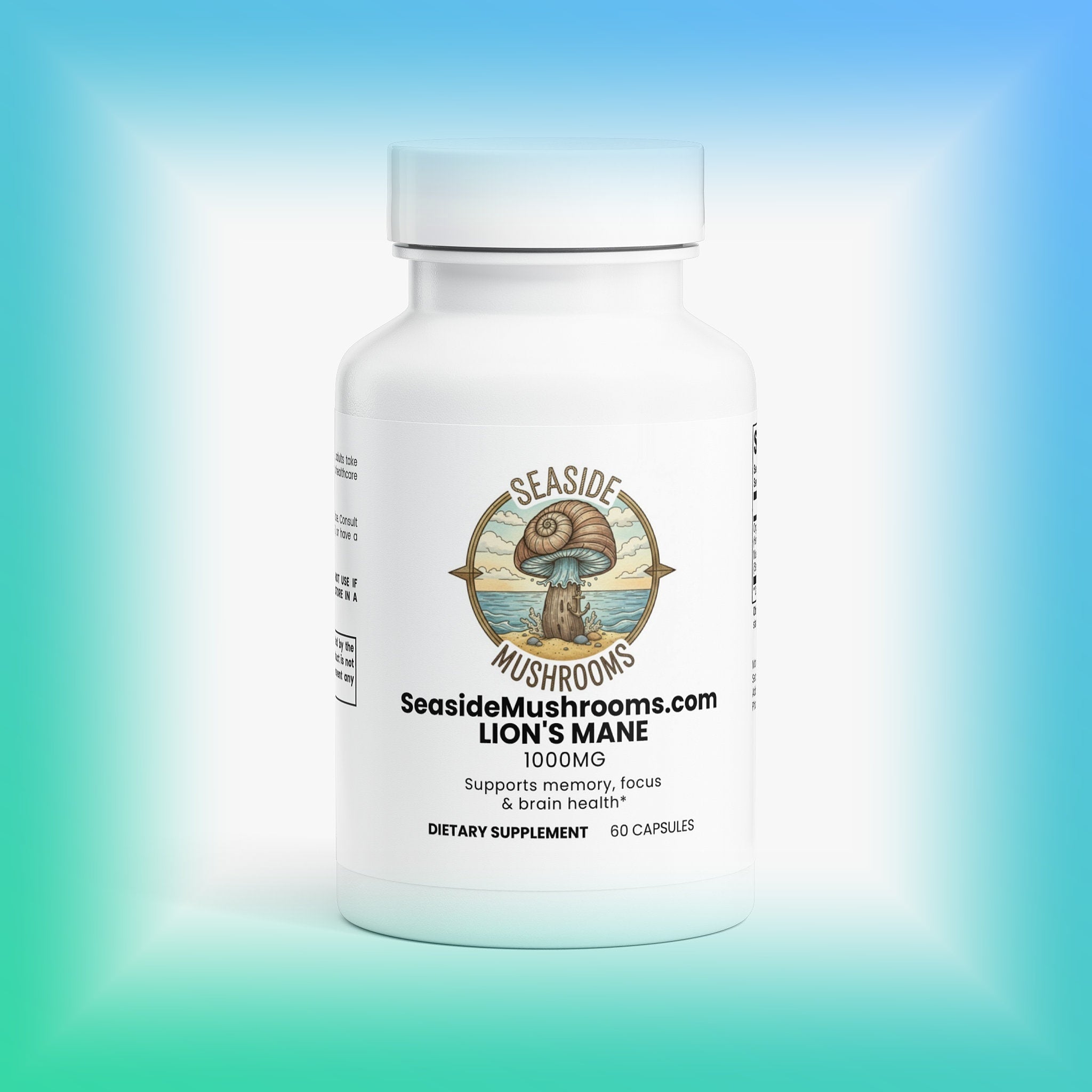
Lion's Mane Capsules
Organic fruiting body, encapsulated. 60 capsules.
View in shop →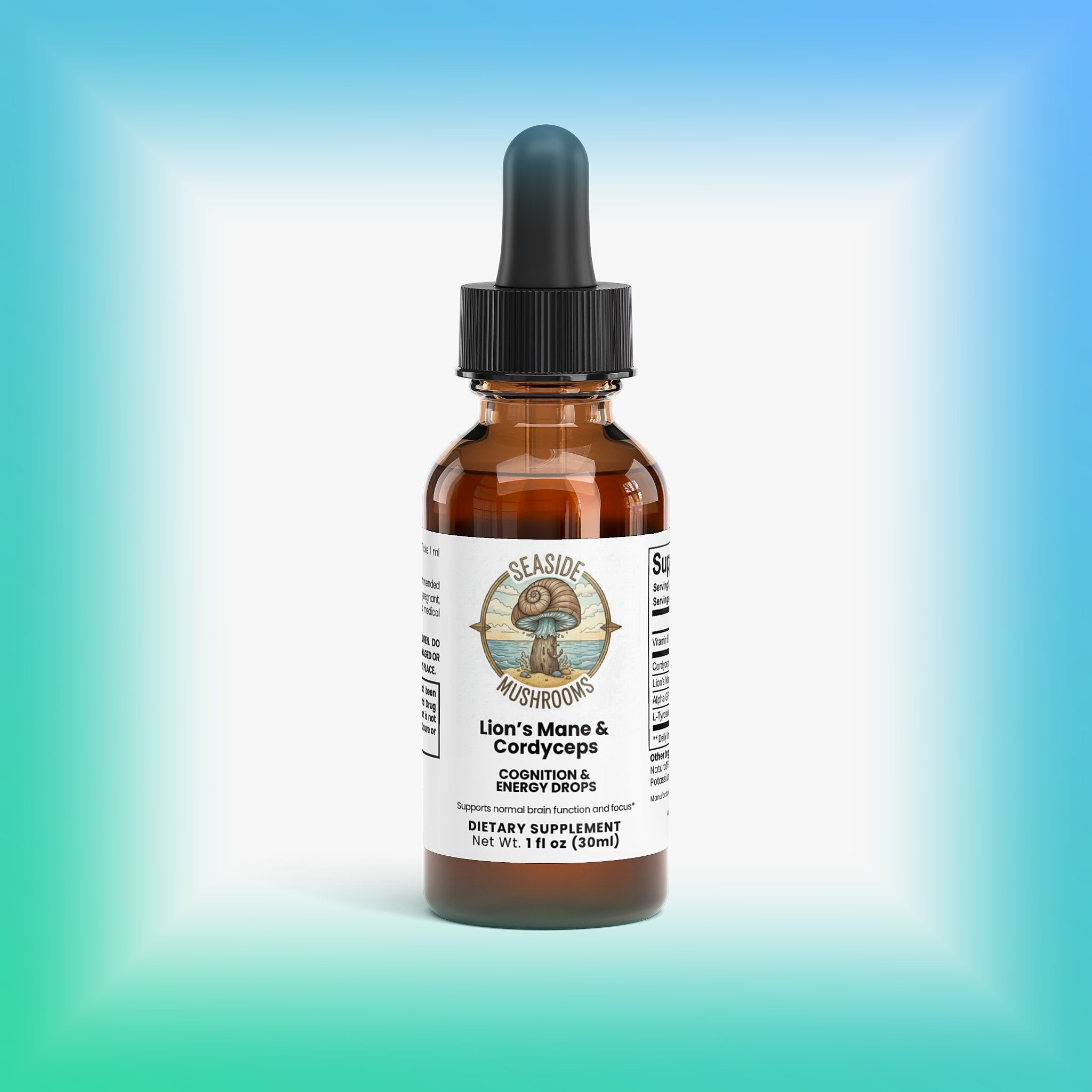 $19.95
Lion's Mane & Cordyceps Drops
Liquid dual-extract of both mushrooms. Add to coffee or water.
View in shop →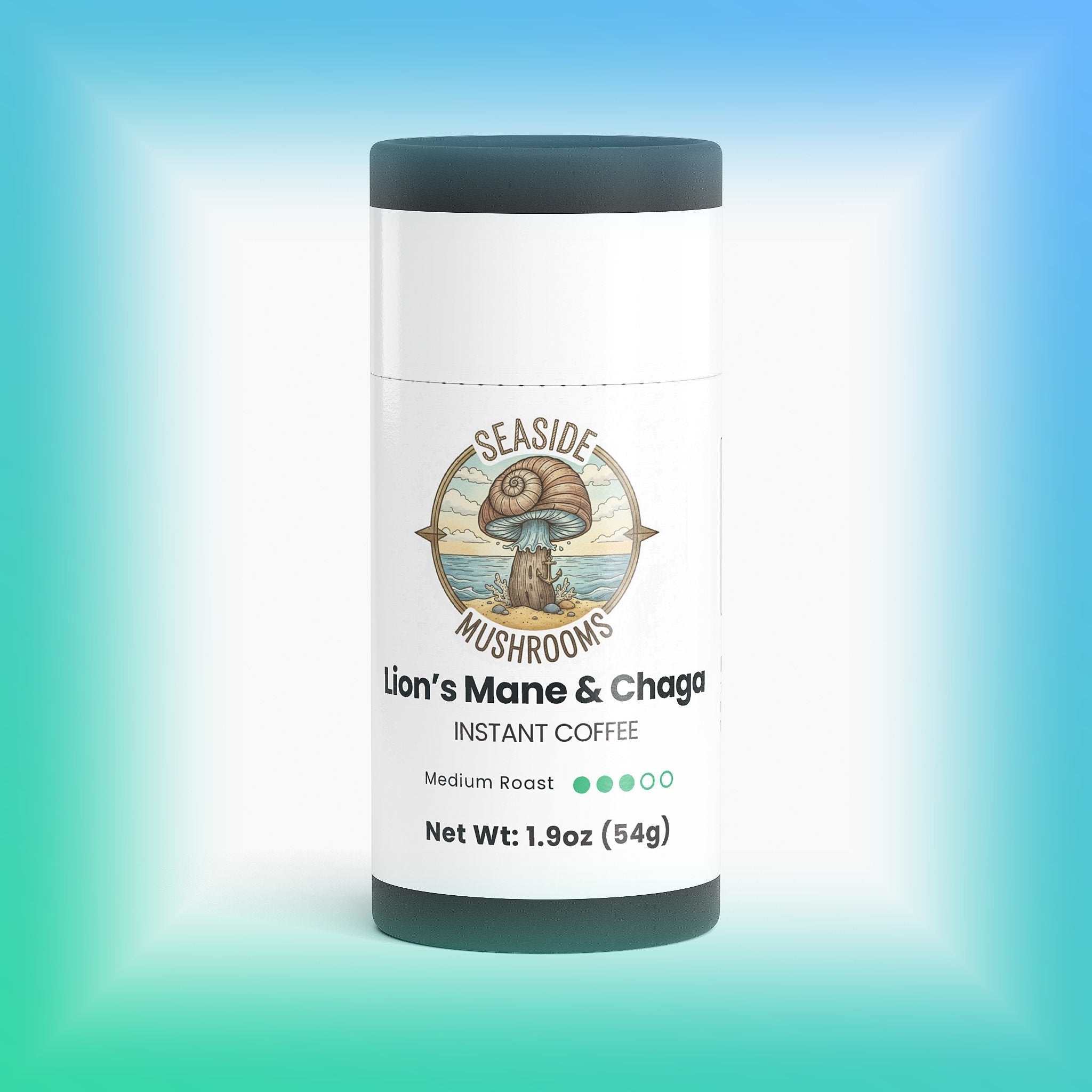 $28.95
Lion's Mane & Chaga Instant Coffee
Medium roast instant, with lion's mane and chaga in the cup.
View in shop →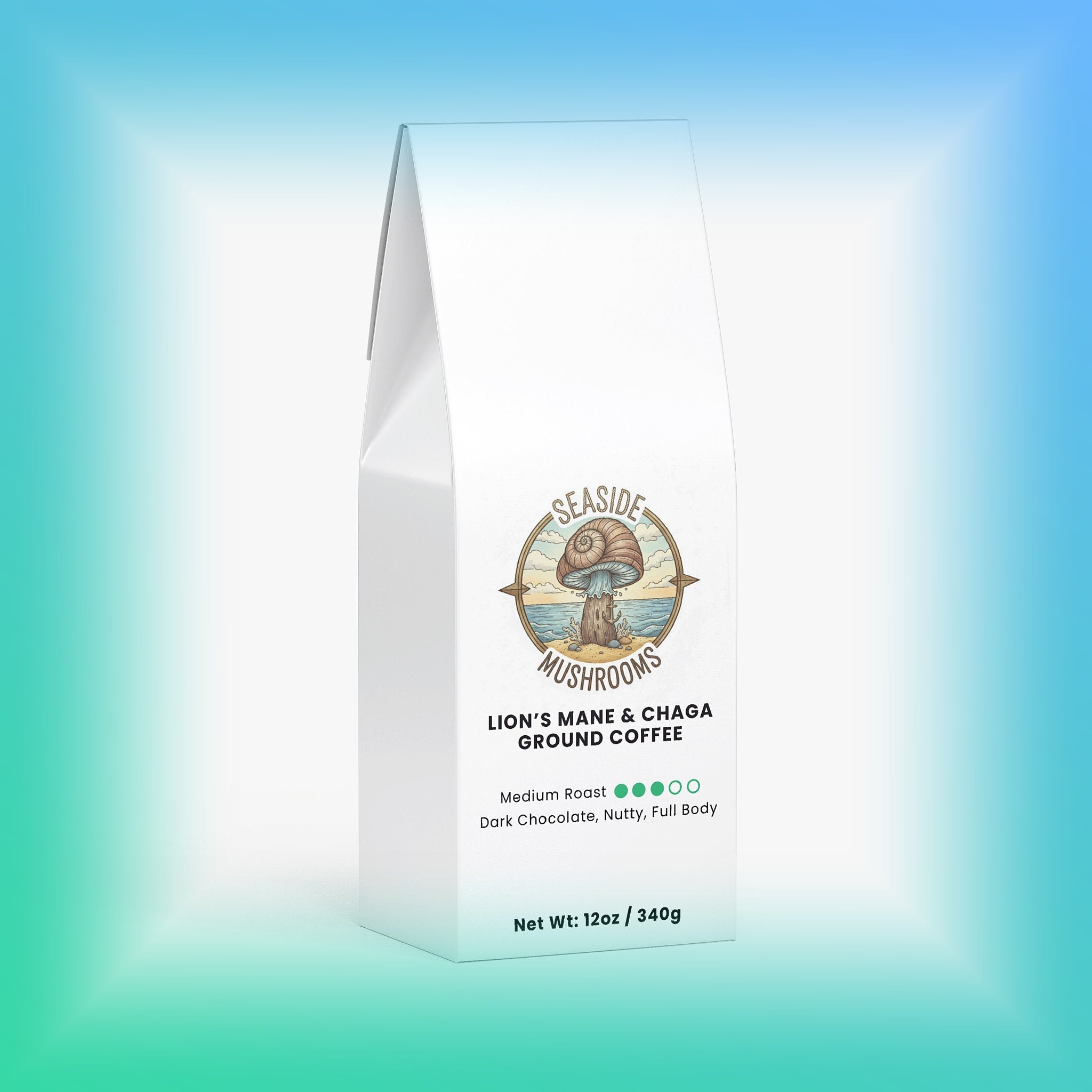 $23.95
Lion's Mane & Chaga Ground Coffee
Medium roast, ground, with lion's mane and chaga.
View in shop →